Quick answer: Property restoration restores homes and businesses after water, mold, fire, storm, or sewage damage, preventing further property loss.
Property damage usually happens without warning. A burst pipe, roof leak, AC drain backup, hidden mold problem, or fire can turn into an emergency fast.
Visible damage is often only part of the problem. Moisture can hide inside walls, ceilings, flooring, attics, and HVAC systems.
Knowing how restoration works helps you act faster and avoid extra damage.
What Is Property Restoration?
Property restoration is the process of stopping damage, finding the source, drying or cleaning affected areas, and repairing the property.
It can include water damage, mold, fire and smoke, storm damage, sewage backups, or biohazard cleanup.
The goal is not just to replace damaged materials. The goal is to make the property safe, dry, clean, and usable again.
Why Fast Action Matters
Time is critical after property damage. Water can spread through drywall, flooring, cabinets, and framing within hours.
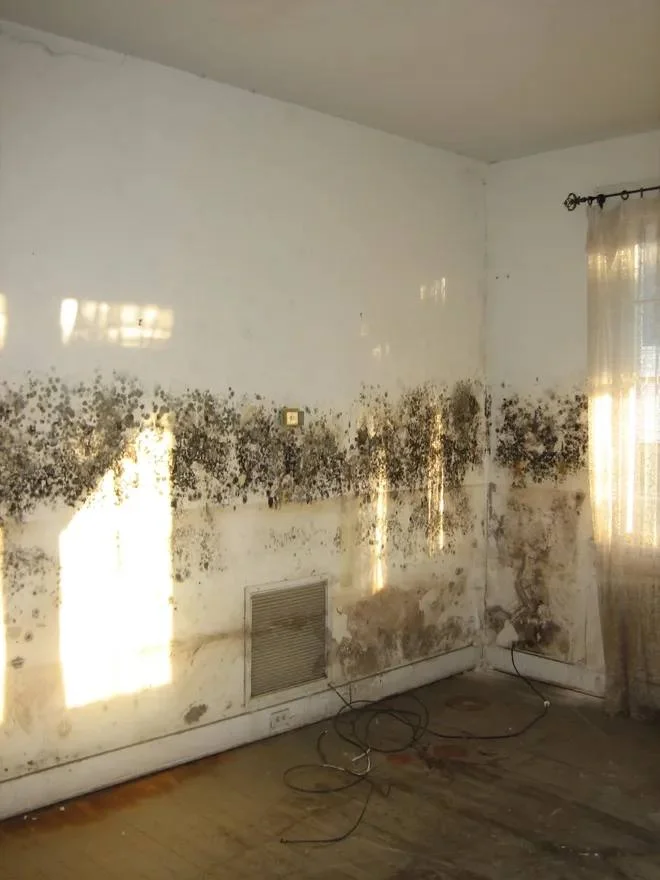
Mold can begin growing within 24 to 48 hours when moisture stays high.
Smoke residue and storm damage can also keep causing problems after the first event is over.
Fast mitigation can save materials and reduce reconstruction costs.
Small Problems Can Become Large Losses
Many major losses start small. Common examples include appliance leaks, toilet leaks, AC drain backups, water heater leaks, roof flashing issues, and hidden pipe leaks.
These issues may stay hidden for weeks. By the time stains or odors appear, moisture may already be in several materials.
The Property Restoration Process
Most restoration jobs follow a clear process. The details change based on the type of damage.
1. Inspection and Damage Assessment
The team finds the source and checks how far the damage has spread.
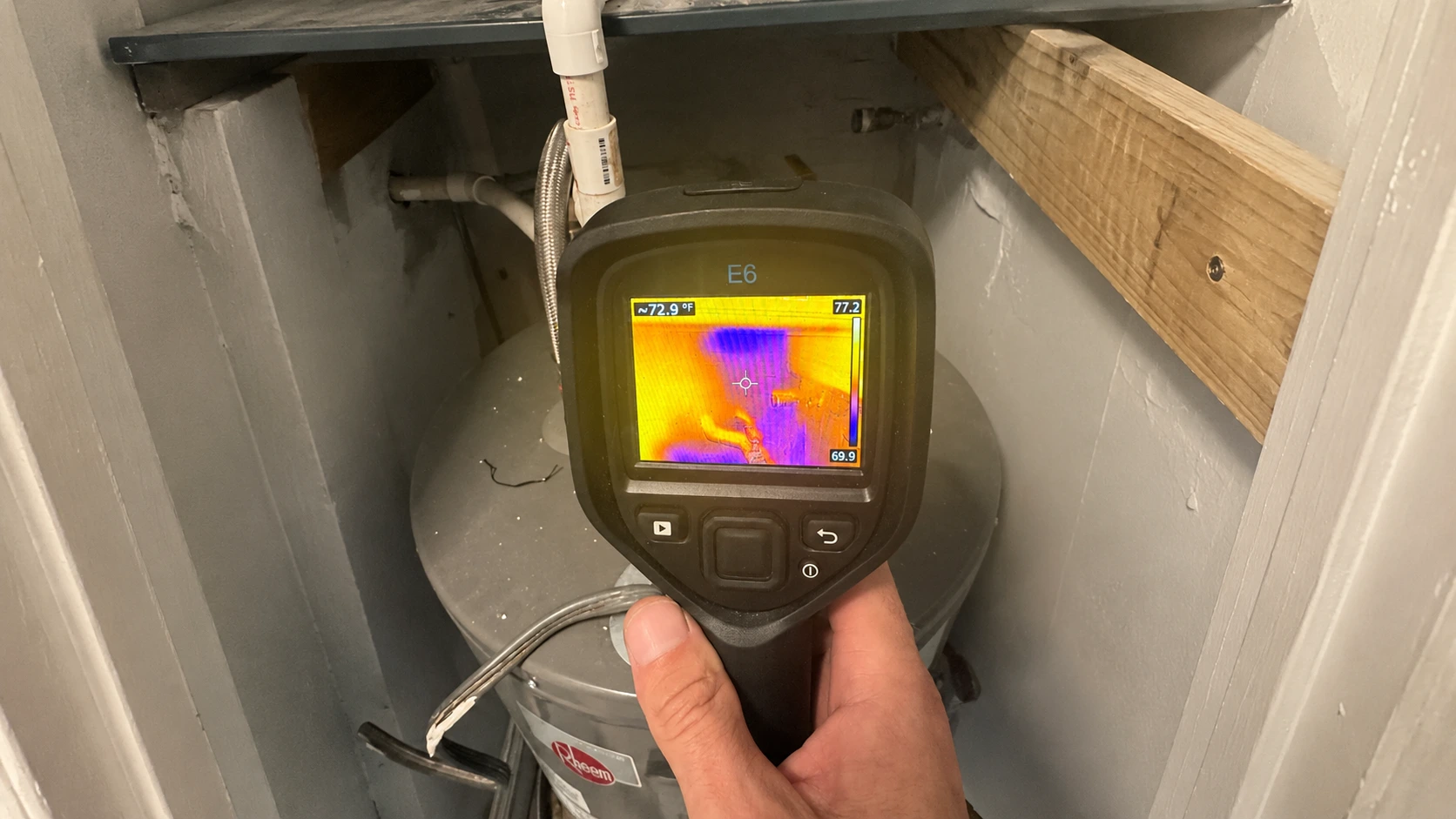
Moisture meters, thermal cameras, hygrometers, and visual inspections help locate hidden damage.
2. Emergency Mitigation
The next step is to stop the damage from getting worse.
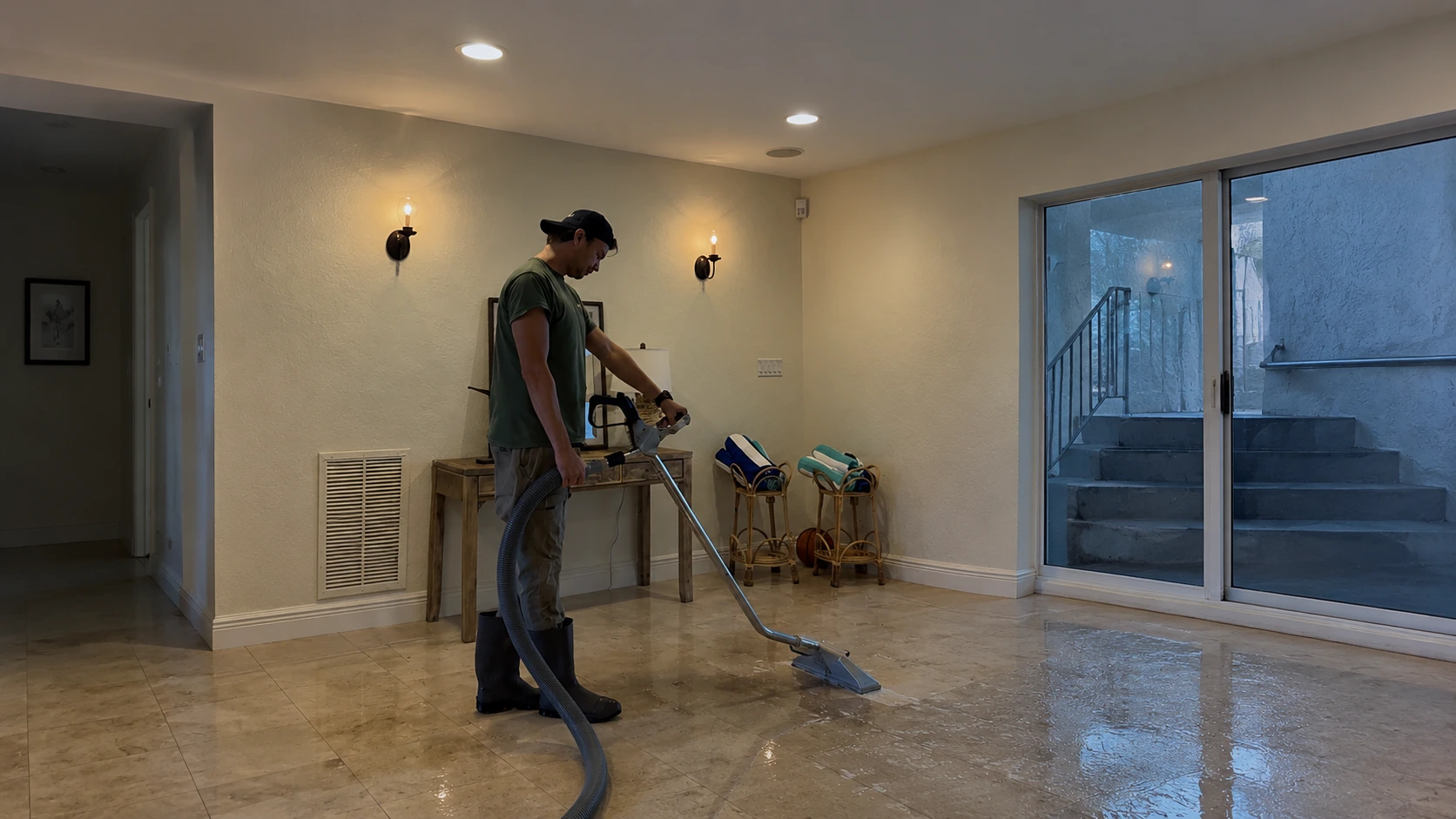
This may include water extraction, roof tarping, board-up service, sewage containment, or safety controls.
3. Drying and Environmental Control
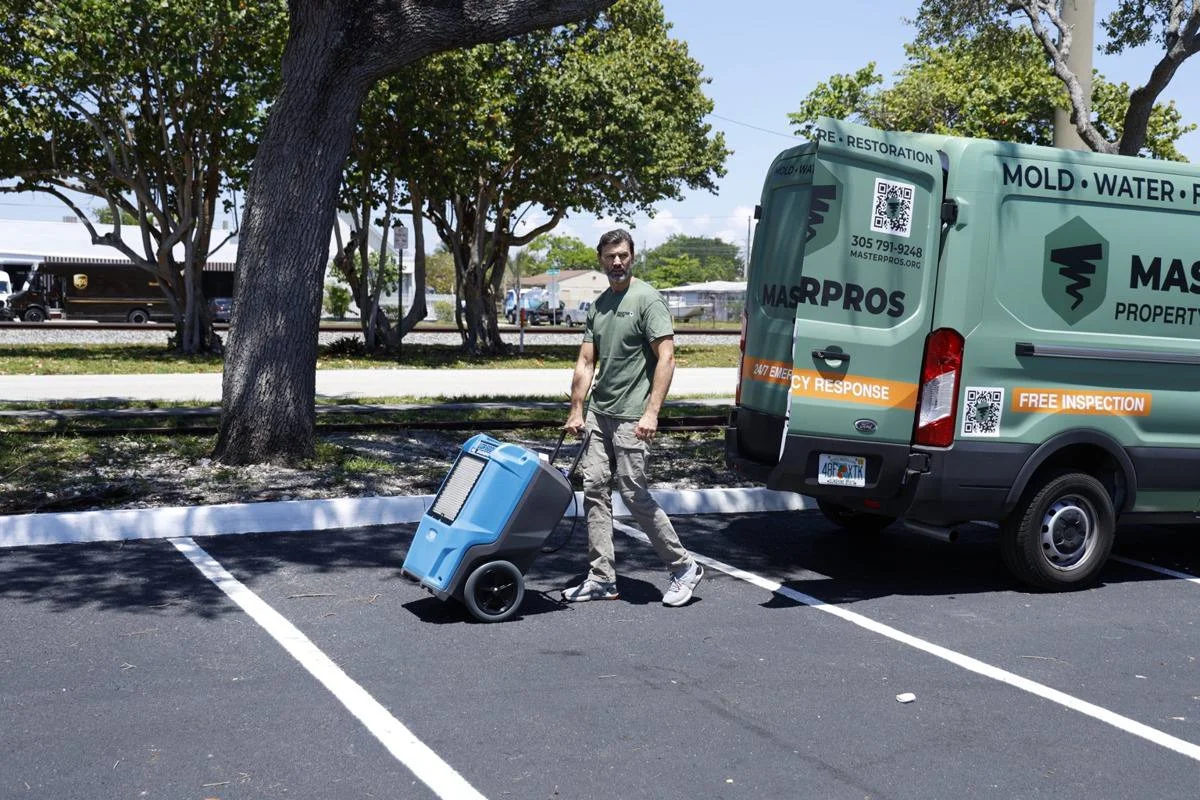
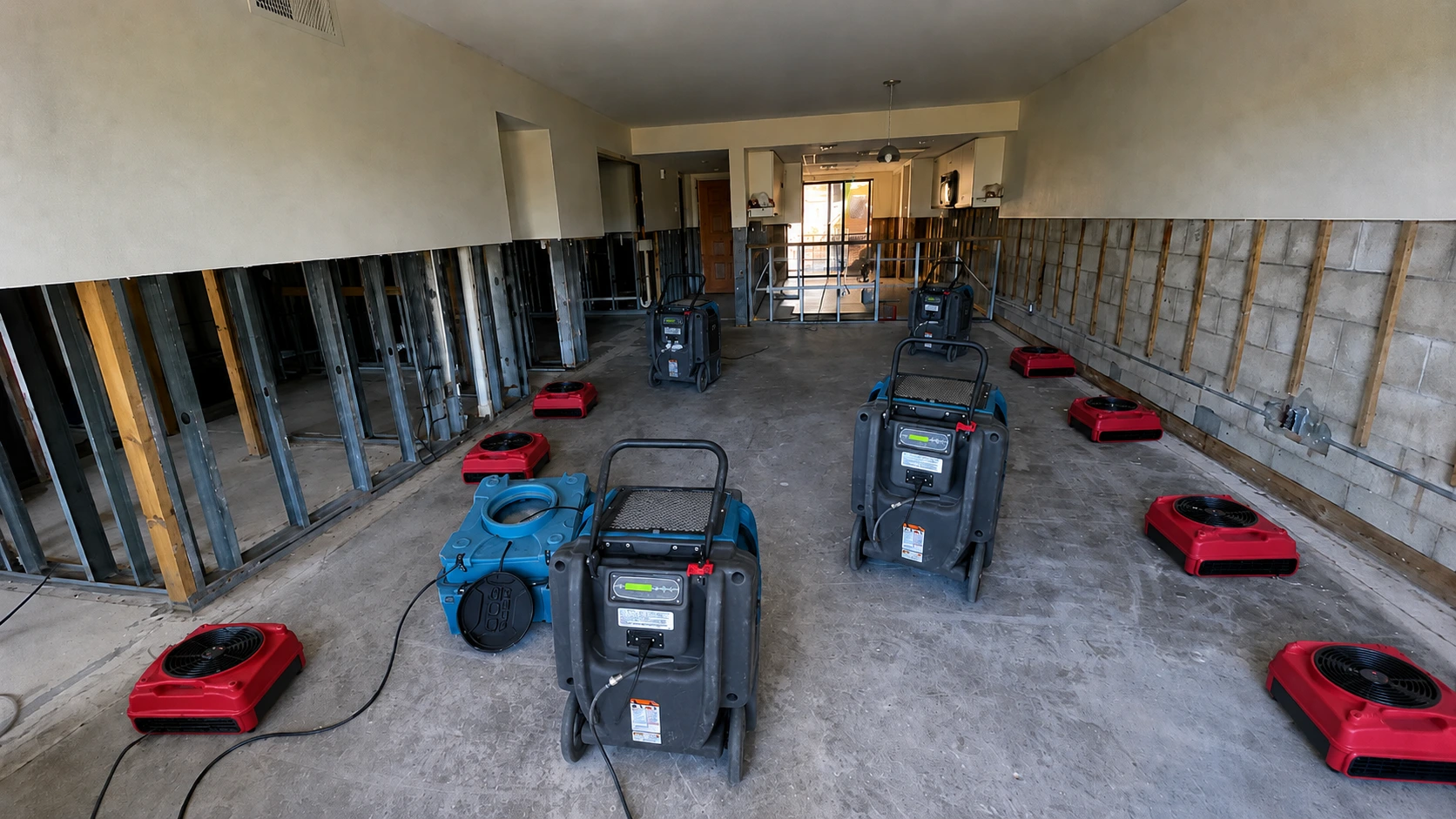
After standing water is removed, drying equipment is installed.
Dehumidifiers, air movers, HEPA scrubbers, and floor drying systems help bring moisture back to safe levels.
4. Cleaning and Remediation
Mold, sewage, smoke, or biohazard damage needs specialized cleaning.
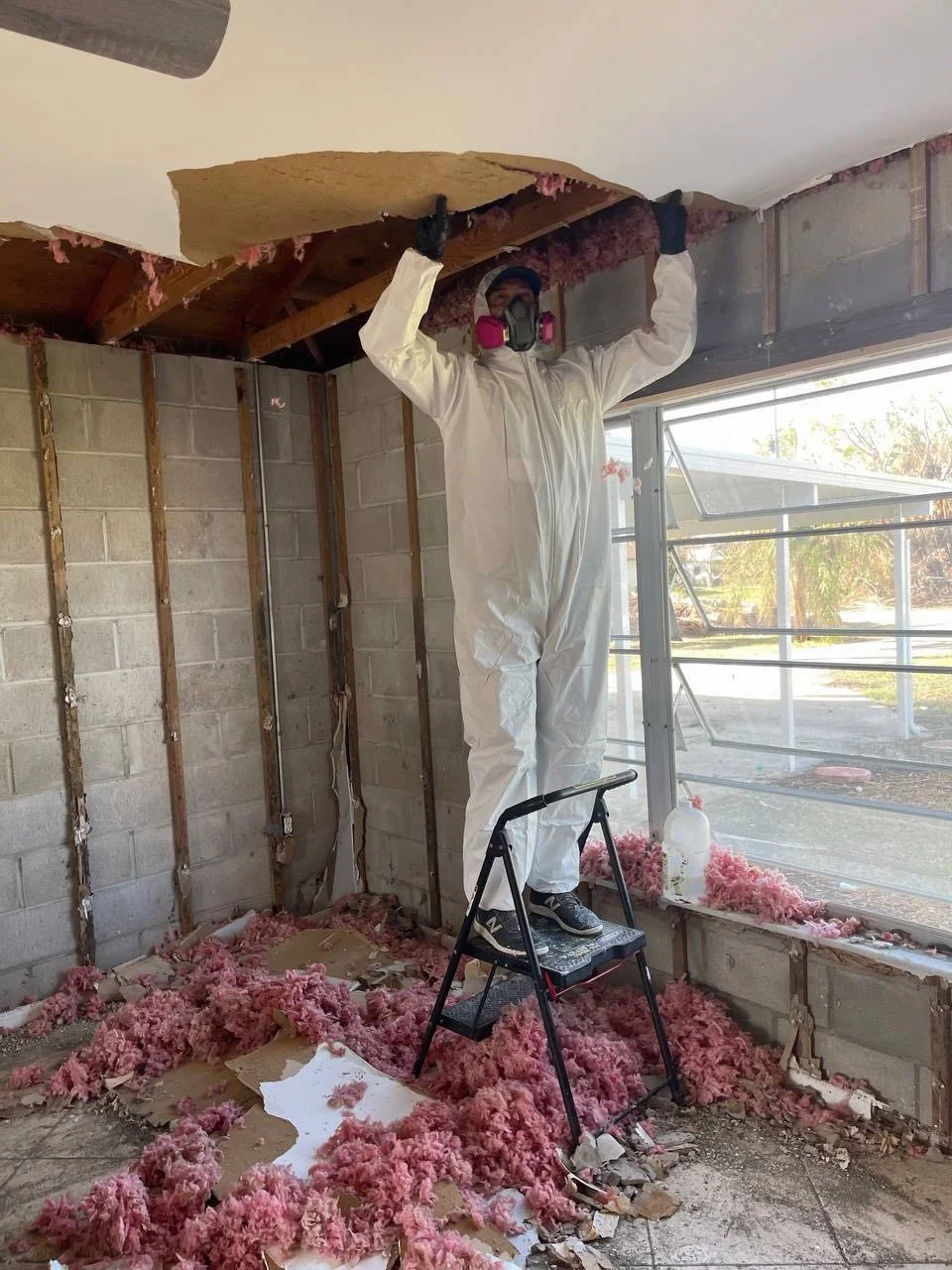
This work may include containment, HEPA vacuuming, antimicrobial treatment, odor control, and controlled demolition.
5. Reconstruction and Recovery
After mitigation is complete, repairs can begin.
Common repairs include drywall, paint, flooring, trim, cabinets, and structural work.
Why Professional Restoration Matters
Surface drying is not enough when water is trapped behind walls or under floors.
Professional teams use training, equipment, moisture checks, and documentation to reduce the chance of repeat problems.
Restoration and Insurance Claims
Insurance claims often need clear documentation.
Photos, moisture readings, drying logs, equipment logs, and scope notes help explain the loss.
Good records make the claim process easier to understand.
South Florida Property Damage Risks
South Florida properties face storms, high humidity, roof leaks, plumbing leaks, HVAC failures, flooding, and mold risk.
Regular checks and early action can keep small problems from becoming major restoration projects.
Get Help Quickly
Property damage rarely improves on its own. Fast inspection, mitigation, drying, and documentation can lower the total loss.
Masterpros provides 24/7 restoration support for water, mold, fire, storm, sewage, indoor air quality, and reconstruction needs across South Florida.