Quick answer: Water damage is more than removing standing water. Discover how professional restoration uses moisture mapping, thermal imaging, structural drying, and mold prevention to eliminate hidden moisture, protect your home’s structure, and prevent costly long-term damage.
The Science Behind Effective Water Damage Restoration: Why Professional Drying Matters
Water damage can happen in minutes, but the consequences can last for years if the drying process isn’t completed correctly. Whether caused by a burst pipe, roof leak, overflowing appliance, or storm flooding, moisture quickly spreads into walls, flooring, insulation, and structural framing. Simply removing standing water is not enough. Hidden moisture can lead to structural deterioration, mold growth, and costly future repairs.
At Masterpros, we combine advanced technology, industry-approved drying methods, and years of restoration experience to ensure every property is restored safely and completely. Here’s a closer look at the science behind professional water damage restoration.
Step 1: Finding the Full Extent of Water Damage
The first priority is stopping the water source and determining how far the moisture has traveled. Water rarely stays where it first appears. It moves through drywall, insulation, wood framing, concrete, and flooring, often affecting areas that aren’t visibly wet.
Our technicians use professional equipment including:
- Thermal imaging cameras
- Non-invasive moisture meters
- Penetrating moisture meters
- Hygrometers that measure temperature and relative humidity
These tools allow us to create a complete moisture map of the property without unnecessary demolition.
Why Moisture Mapping Matters
Many homeowners assume that if a wall feels dry, the problem has been solved. Unfortunately, moisture often remains trapped inside building materials.
Infrared cameras identify temperature differences caused by evaporating moisture. Moisture meter readings then confirm exactly which materials remain wet. This allows us to remove only materials that are truly damaged while preserving unaffected areas whenever possible.
The result is:
- Less demolition
- Faster restoration
- Lower reconstruction costs
- More accurate insurance documentation
Understanding Water Categories
Not all water damage is the same. Restoration professionals classify water into three categories:
Category 1
Clean water from sources such as supply lines or sink overflows.
Category 2
Gray water containing contaminants from washing machines, dishwashers, or similar appliances.
Category 3
Highly contaminated water from sewage backups, storm flooding, or other unsanitary sources requiring specialized cleaning and disinfection.
Proper classification determines the cleaning procedures, protective equipment, and restoration methods needed for each project.
The Science of Structural Drying
After standing water has been extracted, significant moisture remains inside building materials.
Professional structural drying relies on psychrometrics—the science of how air, temperature, humidity, and moisture interact.
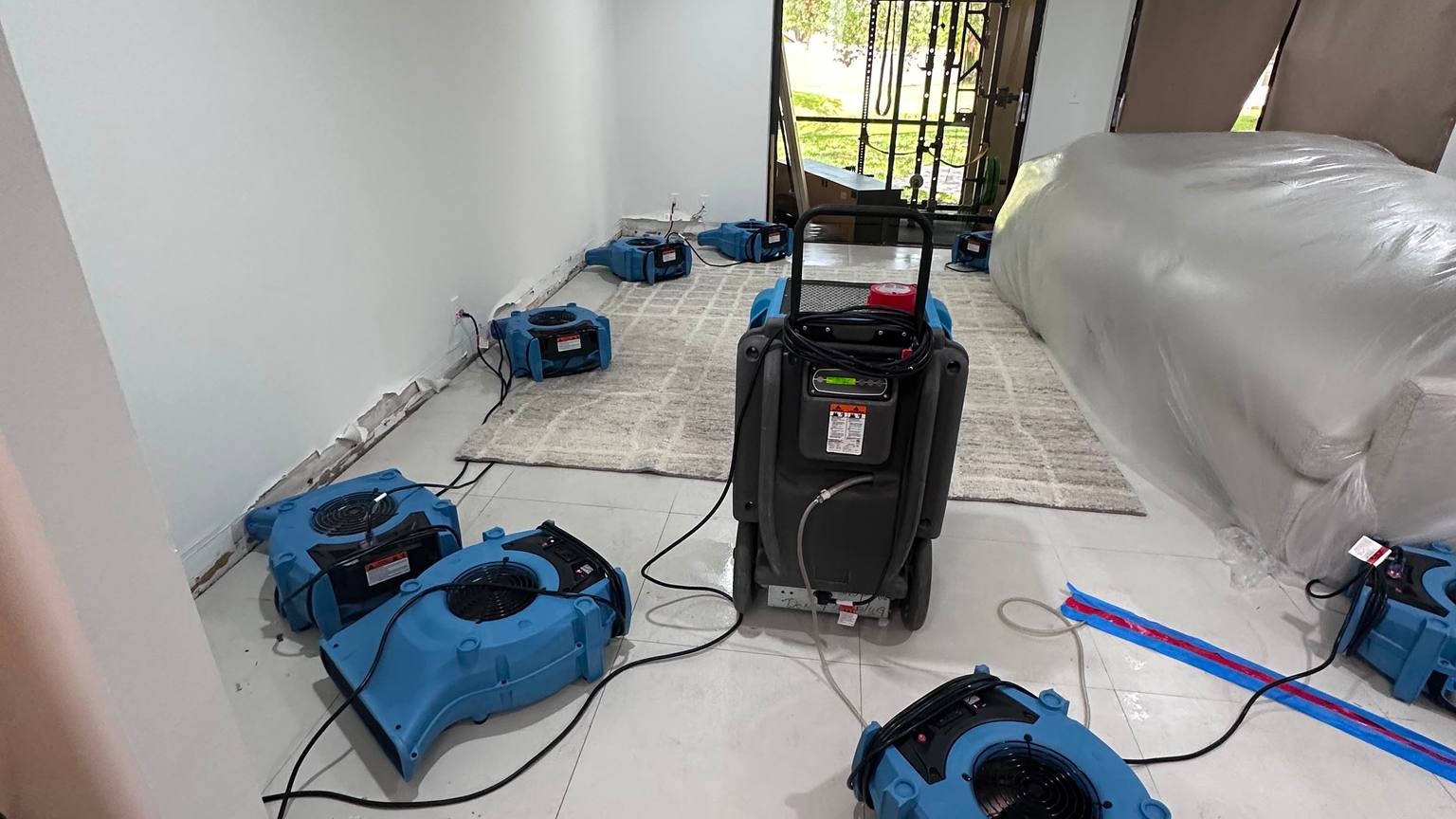
Industrial air movers increase evaporation by moving dry air across wet surfaces, while commercial dehumidifiers remove moisture from the air before it can be reabsorbed into the structure.
Masterpros utilizes professional-grade drying equipment including:
- High-capacity air movers
- Low Grain Refrigerant (LGR) dehumidifiers
- HEPA air filtration systems
- Negative air machines when necessary
Throughout the drying process, technicians monitor moisture levels daily to ensure materials continue drying until they return to acceptable standards.
Preventing Mold Before It Starts
One of the biggest risks following water damage is mold growth.
In Florida’s warm and humid climate, mold can begin developing within 24 to 48 hours if moisture is left untreated.
Professional mitigation focuses on:
- Rapid water extraction
- Continuous structural drying
- Maintaining indoor humidity below recommended levels
- Applying EPA-registered antimicrobial treatments when appropriate
- Using HEPA air scrubbers to capture airborne particles during remediation
Early intervention significantly reduces the likelihood of widespread microbial growth.
Every Building Material Dries Differently
Different materials absorb and release moisture at different rates.
For example:
- Solid wood framing can often be successfully dried.
- Drywall may require removal if saturation is severe.
- Fiberglass insulation typically loses effectiveness once wet.
- Engineered wood flooring and particleboard frequently swell and delaminate after prolonged exposure.
Understanding how each material behaves allows restoration professionals to determine what can be saved and what must be replaced.
Monitoring Until Drying Is Complete
Professional restoration doesn’t end when the equipment is installed.
Certified technicians perform regular inspections and document:
- Moisture content
- Relative humidity
- Ambient temperature
- Equipment performance
- Daily drying progress
Drying equipment remains in place until moisture readings match normal levels found in unaffected areas of the property.
This verification process helps prevent future problems such as hidden mold, wood rot, flooring failures, or paint damage.
Following Industry Standards
Professional water damage restoration follows established industry guidelines, including the ANSI/IICRC S500 Standard for Professional Water Damage Restoration.
These standards outline best practices for:
- Inspection
- Water extraction
- Structural drying
- Cleaning
- Monitoring
- Documentation
- Final verification
Following these procedures helps ensure restoration is completed safely, effectively, and with proper documentation for insurance claims.
Why Professional Water Damage Restoration Matters
Water damage isn’t just about removing visible water—it’s about eliminating hidden moisture before it causes long-term structural problems.
Professional restoration combines advanced diagnostic equipment, moisture science, controlled drying techniques, and continuous monitoring to restore a property as efficiently as possible.
At Masterpros, our experienced restoration specialists use state-of-the-art equipment and proven industry methods to identify hidden moisture, prevent mold growth, protect structural materials, and return your property to pre-loss condition.
Need Emergency Water Damage Restoration?
If your home or business has experienced water damage, don’t wait. The sooner professional drying begins, the greater the chance of minimizing damage and reducing repair costs.
Masterpros provides 24/7 emergency water damage restoration, structural drying, mold prevention, moisture inspections, and complete reconstruction services throughout Broward County, Miami-Dade County, and surrounding South Florida communities.
Contact Masterpros today to schedule a professional inspection and let our certified restoration team help protect your property from further damage.