
Quick answer:
Why Are My Air Ducts Sweating? Causes of AC Duct Condensation in South Florida
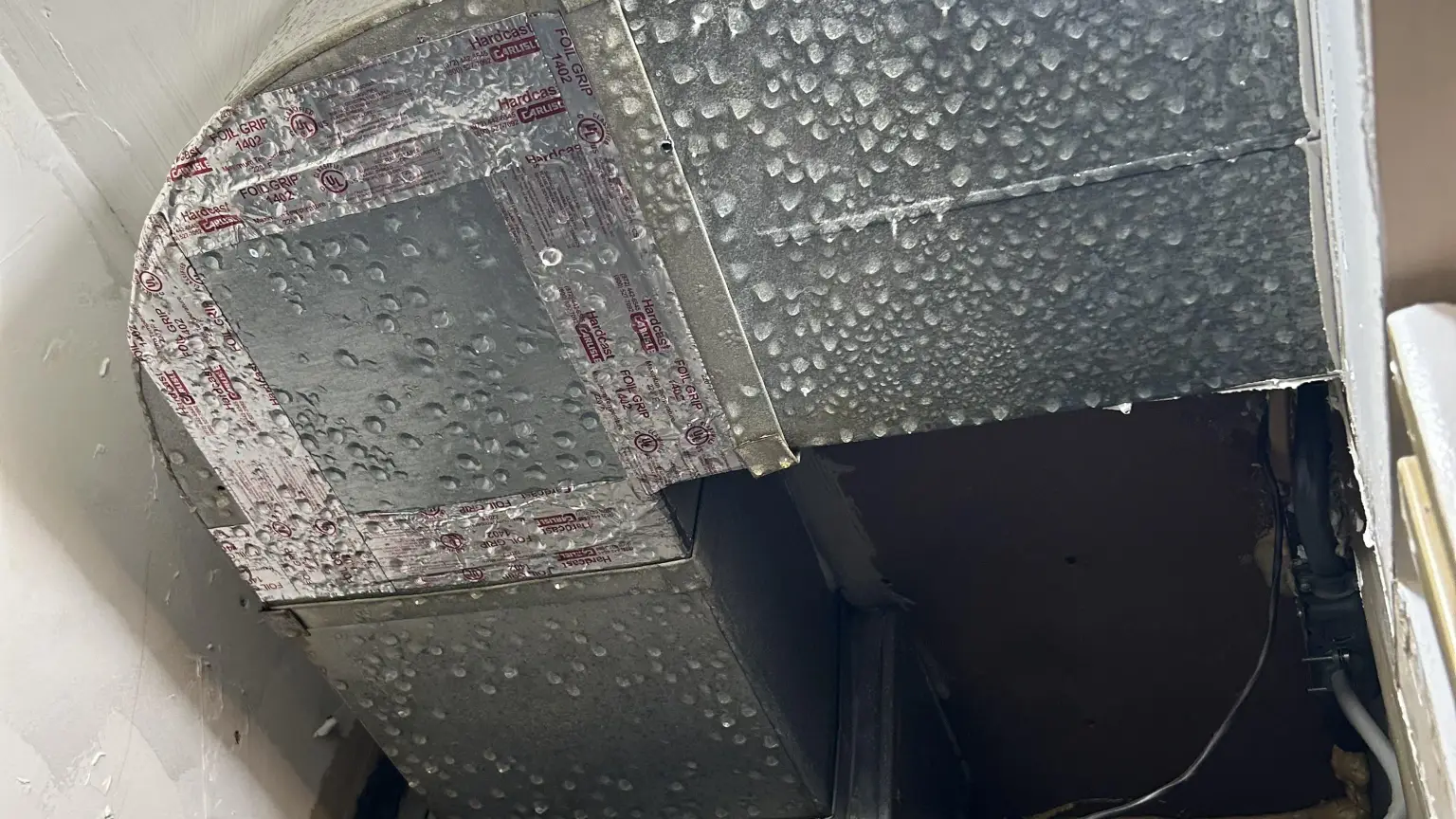
Quick Take: Condensation on air ducts—often called duct sweating—is especially common in South Florida. When cold AC ductwork comes into contact with the warm, moisture-heavy air found in attics, garages, ceiling cavities, and other spaces, water can form on the outside of the ducts. Persistent condensation should not be ignored. It can wet insulation, stain ceilings and drywall, damage building materials, and create conditions that support mold growth.
For homeowners in Hollywood, Fort Lauderdale, Pembroke Pines, Hallandale Beach, Miramar, Miami, Miami Beach, Aventura, and surrounding South Florida communities, recurring condensation is often a sign that the moisture source, duct insulation, air leakage, or HVAC conditions need to be investigated.
Why Is Condensation So Common on Air Ducts in South Florida?
Air conditioning systems in South Florida operate in one of the most challenging climates in the country: high temperatures, high humidity, long cooling seasons, and frequent afternoon storms.
Your AC system sends cold air through ductwork while the air surrounding those ducts may be significantly warmer and more humid. This is particularly common when ducts run through an attic.
When the exterior surface temperature of a duct falls below the dew point of the surrounding air, moisture in that air can condense into water droplets.
A small amount of temporary surface moisture may not indicate a major problem. But ducts that remain wet, repeatedly drip water, or soak nearby insulation deserve attention.
What Causes Air Ducts to Sweat?
There isn’t one universal cause of duct condensation. In South Florida homes, we frequently find that several conditions are contributing at the same time.
- High Indoor Humidity
High humidity is one of the biggest contributors to condensation problems in South Florida.
When moisture levels inside a home remain elevated, cold surfaces become much more likely to collect condensation. This can happen because of inadequate dehumidification, air leakage, oversized HVAC equipment, ventilation problems, doors or windows frequently being left open, or moisture entering from another source.
Maintaining appropriate indoor humidity is important not only for comfort but also for controlling moisture throughout the building.
- Damaged or Missing Duct Insulation
Insulation creates a thermal barrier between cold conditioned air inside the duct and warm humid air outside it.
When duct insulation is missing, compressed, deteriorated, poorly installed, or damaged, portions of the duct can become cold enough for condensation to develop.
Sometimes the problem occurs only at a small section, connection, boot, or register rather than throughout the entire duct system.
- Air Leaks Around Duct Connections
Disconnected or poorly sealed ducts can create serious moisture problems.
Leaks around joints, plenums, boots, and connections may allow humid attic air to interact with cold duct surfaces. Depending on where the leak occurs, conditioned air may also escape into the attic, reducing HVAC efficiency.
A duct system should be evaluated for both insulation condition and air leakage when unexplained condensation keeps returning.
- Condensation Around AC Vents and Registers
Sometimes homeowners first notice the problem as discoloration, moisture, or mold-like growth around a ceiling vent.
The visible vent may not actually be the original source.
Cold supply registers can sweat when they are exposed to humid room air. Insulation gaps around the register boot can also allow hot attic air to reach cold surfaces above the ceiling.
Over time, the surrounding drywall can become damp and develop staining or microbial growth.
- Restricted HVAC Airflow
Dirty filters, blocked returns, closed supply vents, dirty coils, or other airflow problems can affect system operation and temperature.
If the HVAC system is not operating correctly, unusually cold surfaces may increase the potential for condensation.
Replacing filters and maintaining the HVAC system regularly is therefore an important part of moisture prevention.
- Air Leaks From the Attic
South Florida attics can become extremely hot and humid.
Gaps around ceiling penetrations, recessed lights, duct boots, attic access points, and other openings can allow humid attic air to move into areas containing cold HVAC components.
This combination of humid air and cold surfaces can produce significant condensation even when the duct itself does not appear damaged.
- HVAC Equipment or Drainage Problems
Not every water stain near an AC vent is caused by sweating ductwork.
Water may also originate from:
- A clogged condensate drain
- An overflowing drain pan
- A leaking air handler
- A frozen evaporator coil
- Improper condensate drainage
- Plumbing located above the ceiling
- Roof leakage
- Exterior water intrusion
This is why identifying the actual moisture source is important before repairing drywall or treating visible mold.
Signs You May Have a Duct Condensation Problem
Homeowners often discover the problem after noticing:
- Water droplets on AC ducts
- Sweating around supply vents
- Brown or yellow ceiling stains
- Damp drywall around registers
- Wet or deteriorated duct insulation
- Musty odors when the AC operates
- Mold-like spotting around vents
- Elevated indoor humidity
- Dripping water from ceiling vents
- Repeated ceiling damage in the same location
If the drywall around a vent keeps becoming wet after repairs, simply repainting the area is unlikely to solve the underlying problem.
Can Sweating Air Ducts Cause Mold?
They can create the moisture conditions that allow mold to grow.
Mold needs moisture and an appropriate food source. Paper-faced drywall, dust, wood, insulation materials, and other building components around a persistently wet duct can provide favorable conditions.
The important distinction is that condensation is the moisture problem; mold can be a consequence of that problem.
Removing visible mold without correcting the condensation source can result in the same condition returning.
Can Duct Condensation Damage Your Ceiling?
Yes.
A sweating duct located above a ceiling may slowly release moisture onto insulation or drywall. Because the problem is hidden, damage can develop before a homeowner sees obvious water.
Over time, you may notice staining, bubbling paint, softened drywall, deterioration around an AC register, or musty odors.
In more significant cases, insulation can become saturated and moisture can spread beyond the original location.
Is the Water Coming From the AC or a Roof Leak?
This is one of the most important questions to answer.
A ceiling stain near an AC vent does not automatically mean the duct is sweating.
South Florida properties commonly experience roof leaks, plumbing leaks, AC condensate problems, and condensation—and they can produce similar visible symptoms.
A professional moisture inspection may include evaluating:
- Moisture levels in affected materials
- Duct insulation
- Supply registers and boots
- Attic conditions
- HVAC components
- Nearby plumbing
- Roof or exterior penetrations
- Visible water patterns
- Indoor humidity
At Masterpros, we focus on finding the moisture source before recommending remediation or restoration work.
How Can Air Duct Condensation Be Prevented?
Keep Indoor Humidity Under Control
Humidity control is particularly important in Florida.
Your AC system should properly cool and dehumidify the property. Homes that consistently experience excessive humidity may need further HVAC evaluation or supplemental dehumidification.
A digital hygrometer can help homeowners monitor changes in indoor relative humidity.
Repair or Replace Damaged Duct Insulation
Exposed cold duct surfaces should be properly insulated.
Damaged insulation should be evaluated rather than simply covered over, especially if it has already become wet or contaminated.
Seal Duct Connections
Leaks should be properly sealed at duct joints, boots, plenums, and connections.
This can reduce contact between humid air and cold duct surfaces while also helping improve HVAC efficiency.
Correct Air Leakage Around Ceiling Penetrations
Gaps between the conditioned living space and attic can introduce unwanted humid air.
Proper air sealing around penetrations and duct boots can help reduce these conditions.
Maintain Your HVAC System
Regular HVAC maintenance can help identify airflow, drainage, coil, and equipment problems before they cause moisture damage.
Filters should be changed according to the system and filter manufacturer’s recommendations, and unusual changes in airflow or cooling performance should be investigated.
Address Wet Materials Quickly
If insulation, drywall, or other porous building materials have become wet, waiting can make the situation worse.
The moisture source should be corrected, affected areas evaluated, and materials properly dried or removed when necessary.
What Should I Do If There Is Mold Around My AC Vent?
Don’t assume that wiping the visible area with household cleaner solves the problem.
Visible growth around an AC vent can sometimes be only the portion of the problem that you can see. Moisture may also be present behind the register, above the ceiling, around the duct boot, or within surrounding insulation.
The first priority should be determining why the area is wet.
Once the moisture source is identified, the extent of affected materials can be evaluated and an appropriate remediation plan established.
When Should You Call a Professional?
Consider having the area inspected when:
- Your air ducts continuously sweat
- Water is dripping from an AC vent
- Ceiling stains continue to grow
- Drywall feels damp or soft
- You notice a persistent musty odor
- Mold-like growth appears around vents
- Duct insulation is visibly wet
- The problem returns after cleaning or painting
- You cannot determine whether the source is HVAC condensation, plumbing, or a roof leak
Finding the source early can help limit the amount of building material affected.
Air Duct Condensation & Mold Inspection in South Florida
Florida’s climate makes moisture management an important part of maintaining a healthy property.
Masterpros provides professional moisture inspections, water damage restoration, structural drying, and mold remediation throughout Hollywood, Fort Lauderdale, Hallandale Beach, Pembroke Pines, Miramar, Davie, Cooper City, Plantation, Weston, Aventura, North Miami, Miami, Miami Beach, Sunny Isles Beach, Coral Gables, and surrounding Broward and Miami-Dade communities.
Our inspections can help determine whether moisture around your ductwork is related to condensation, an HVAC issue, plumbing, roof leakage, or another source.
When mold remediation is required, we use professional containment, HEPA air filtration, removal of affected materials when appropriate, cleaning, and moisture-control procedures designed to address both the contamination and the conditions that allowed it to develop.
Frequently Asked Questions
Why are my AC ducts sweating in Florida?
Florida’s warm, humid climate creates a large temperature difference between cold AC ducts and the surrounding air. If the duct surface reaches the dew point, moisture can condense on it. Poor insulation, air leakage, and excessive humidity can make the problem worse.
Why is there water around my AC vent?
Possible causes include duct condensation, missing insulation around the duct boot, high indoor humidity, an AC condensate problem, roof leakage, or plumbing. The source should be identified before repairs are made.
Can condensation on AC ducts cause mold?
Persistent condensation can provide the moisture needed for mold growth on surrounding drywall, insulation, wood, dust, and other materials.
Should I replace wet duct insulation?
Wet or damaged insulation should be professionally evaluated. Depending on the material, amount of moisture, duration of exposure, and contamination, replacement may be more appropriate than simply attempting to dry it.
Why does mold keep coming back around my AC vents?
Recurring growth often indicates that the underlying moisture condition has not been corrected. High humidity, condensation, insulation gaps, or air leakage should be investigated.
Is duct sweating normal in South Florida?
Occasional condensation can occur under extreme conditions, but persistent sweating, dripping water, wet insulation, or ceiling damage should not be considered normal.
Who should I call for condensation and mold around air ducts?
An HVAC contractor can evaluate mechanical problems with the AC and duct system. If moisture has already damaged building materials or mold is present, a qualified water-damage or mold-remediation professional may also be needed.
Need Help With Moisture or Mold Around Your AC Ducts?
If you’re seeing water stains, sweating ducts, wet drywall, mold around AC vents, or unexplained musty odors, don’t wait for the affected area to spread.
Masterpros — Property Damage Specialists Water Damage Restoration | Structural Drying | Mold Remediation Serving Hollywood, Fort Lauderdale, Miami and surrounding South Florida communities 24/7 Emergency Response | Free Inspection Call: (305) 791-9248 Visit: Masterpros.org